Requirements, Career Impact and Why It Matters in Cybersecurity Audit
In an increasingly regulated digital economy, organizations are expected not only to secure their systems but to demonstrate through independent assurance that their controls are effective, documented and compliant.
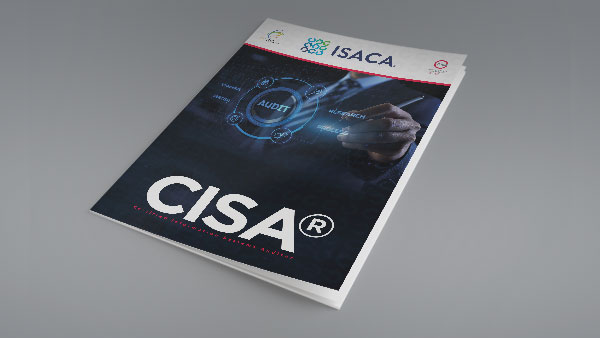
At the heart of this assurance ecosystem stands a globally recognized credential: the Certified Information Systems Auditor (CISA).
Awarded by ISACA, the CISA certification has become one of the most respected qualifications for professionals working in IT audit, governance and risk management. For many organizations, it represents a benchmark of credibility in cybersecurity assurance.
But what exactly does CISA certify? And why does it carry such weight in today’s professional landscape?
What Is CISA?
The Certified Information Systems Auditor (CISA) is a professional certification designed for individuals who audit, control, monitor and assess information systems.
Unlike highly technical cybersecurity certifications that focus on system configuration or penetration testing, CISA emphasizes:
- Audit methodology
- Governance structures
- Risk management processes
- Internal control evaluation
- Compliance assessment
In essence, CISA validates a professional’s ability to assess whether cybersecurity and IT controls are properly designed and effectively implemented.
Why CISA Is Strategically Important
In many industries particularly finance, government and multinational corporations cybersecurity audit findings directly influence board-level decisions.
Regulators and external auditors increasingly expect structured evidence of IT control effectiveness. Organizations must demonstrate accountability.
CISA-certified professionals provide that assurance.
The certification signals that its holder understands:
- How to plan and execute information systems audits
- How to evaluate governance frameworks
- How to assess enterprise risk management
- How to test and report on internal controls
It is not simply a technical credential it is a governance credential.
The Five Core Domains of CISA
The CISA examination is structured around five major domains, reflecting the scope of professional practice.
1. Information Systems Auditing Process
Covers audit planning, execution, evidence gathering and reporting standards.
2. Governance and Management of IT
Focuses on governance structures, policies and organizational oversight.
3. Information Systems Acquisition, Development and Implementation
Evaluates control mechanisms during system development and deployment.
4. Information Systems Operations and Business Resilience
Addresses operational controls, incident response and continuity planning.
5. Protection of Information Assets
Covers security controls, logical access management and data protection measures.
These domains collectively reflect the strategic nature of IT audit within cybersecurity governance.
Who Should Consider the CISA Certification?
CISA is particularly relevant for professionals working in:
- Cybersecurity audit
- Internal audit
- Risk management
- Compliance
- Information security governance
It is also highly suitable for professionals transitioning from accounting or finance into cybersecurity, as it builds upon structured audit methodologies.
Experience Requirements
To obtain the CISA designation, candidates must pass the exam and demonstrate relevant professional experience in information systems auditing or related functions.
This requirement reinforces the certification’s reputation it reflects both theoretical knowledge and practical exposure.
Career Impact and Market Value
CISA-certified professionals often occupy roles such as:
- IT Auditor
- Cybersecurity Internal Auditor
- Risk and Compliance Manager
- Information Security Governance Specialist
The certification enhances credibility with regulators, executive leadership and external auditors.
Globally, CISA holders benefit from strong professional mobility and competitive compensation, particularly in regulated industries.
Preparing for CISA: A Structured Approach
The CISA examination is rigorous and requires structured preparation. Successful candidates typically follow a three-step pathway:
- Foundational understanding of cybersecurity and governance principles
- Practical exposure to audit methodology and control testing
- Intensive exam-focused preparation through structured bootcamps
Short, concentrated bootcamps often delivered over five days provide focused review of exam domains, practice questions and strategic guidance.
Given the breadth of topics covered, disciplined preparation is essential.
Why CISA Remains Relevant in a Changing Cyber Landscape
As cybersecurity threats evolve, regulatory scrutiny intensifies. Organizations must not only defend against attacks but prove that their defenses are structured and accountable.
CISA remains relevant because it validates precisely that capability.
It is a certification rooted in governance, risk and compliance the strategic backbone of modern cybersecurity.
For professionals seeking long-term stability, executive visibility and global recognition within cybersecurity audit, CISA represents a powerful credential.